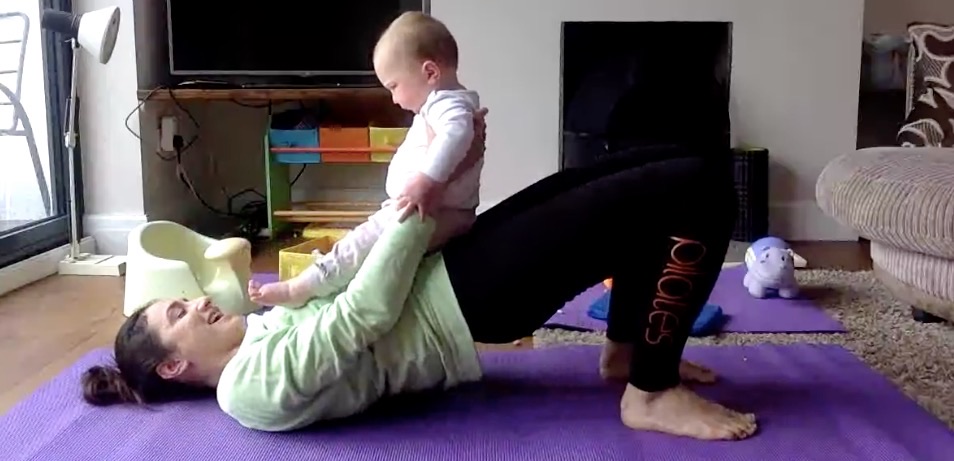
Over the past eight years, teaching parent and baby Pilates classes has been one of the most meaningful parts of my work as a physiotherapist and Pilates instructor. The idea for these sessions came from my own experience after the birth of my first daughter. Like many new mothers, I was searching for a class I could attend with my baby – something that would support my body after pregnancy while also helping me regain strength and confidence in movement.
However, I struggled to find a class locally that combined safe postnatal rehabilitation with progressive exercise. I wanted something that respected the needs of the recovering body but still challenged it in a positive way. Drawing on my experience as a Pilates teacher and my background in pelvic health physiotherapy, I decided to create the class I had been searching for.
What started as a personal solution soon became an incredibly rewarding part of my teaching journey.
Why Parent and Baby Pilates Matters
Parent and baby Pilates classes offer far more than just exercise. They provide mothers with a supportive space to rebuild strength, reconnect with their bodies and navigate recovery after birth.
Equally important is the sense of community these classes create. Early parenthood can sometimes feel isolating, and these sessions offer an opportunity for parents to meet others experiencing a similar stage of life. At the same time, babies are introduced to movement and physical activity in a calm, positive environment.
Sharing movement together from such an early stage often helps foster a lifelong relationship with exercise.
Continuing the Journey: Pilates for Growing Children
As my own children have grown, they have naturally developed a love for Pilates too. This inspired me to expand my teaching to include parent and child workshops for older children.
Pilates supports children’s development in many ways. It helps improve posture, coordination and balance, while also strengthening the core and developing body awareness. The mindful nature of Pilates encourages focus and controlled movement, which can support concentration and emotional regulation.
Most importantly, it introduces children to movement in a fun and supportive environment. When children associate exercise with enjoyment and confidence, they are far more likely to carry those habits into later life.
Tips for Teaching Classes with Children
Teaching classes that include babies and children can be incredibly fulfilling, but it does require a slightly different mindset and approach.
Expect noise – and a little chaos
Parent and baby classes are rarely quiet or perfectly structured. Babies will cry, need feeding or require attention, and that is completely normal.
It helps to set expectations at the start of the class so parents feel comfortable attending to their baby whenever they need to. There will be moments when exercises pause entirely because everyone is focused on their child. Rather than seeing this as a disruption, it is often best to treat it as a natural break, reset the room and begin again when everyone is ready.

Understand the cyclical nature of baby classes
Parent and baby classes tend to operate in cycles. As maternity leave ends, many parents return to work and move on from the sessions, which means new groups join regularly.
Planning ahead for when to promote and recruit new participants helps keep classes full and ensures continuity in your schedule.
That said, one of the most rewarding aspects is that many parents continue their Pilates journey with you. A large number of my class attendees naturally progress into my mat or reformer classes once their babies are a little older.
Use block bookings
From a business perspective, block bookings usually work best for baby classes. Babies may become unwell, families have appointments and routines change quickly. Running sessions in blocks creates structure for both the instructor and the participants.
It also helps build relationships within the group. When the same parents attend each week, a strong sense of community develops. As an instructor, it also allows you to become familiar with each participant’s birth story and medical background, helping you support them more safely and effectively.

Watching Families Grow
One of the most special parts of running these classes is seeing families return years later. Since introducing parent and child workshops, I now have people attending sessions with children who are eight years old – many of whom originally came to my parent and baby classes.
Being able to support families throughout that journey, and to have played a small part in shaping their relationship with movement from the very beginning, is incredibly rewarding.
Upskill with APPI’s CPD Courses
If you are interested in expanding your expertise in this area, explore our specialised CPD courses designed for physiotherapists, Pilates instructors and healthcare professionals:
- Ante & Post Natal Pilates
https://appihealthgroup.com/buy/ante-post-natal-pilates/ - Kids & Teens Pilates
https://appihealthgroup.com/buy/kids-teens-pilates/

Blog by Pippa Carter
APPI Master Trainer