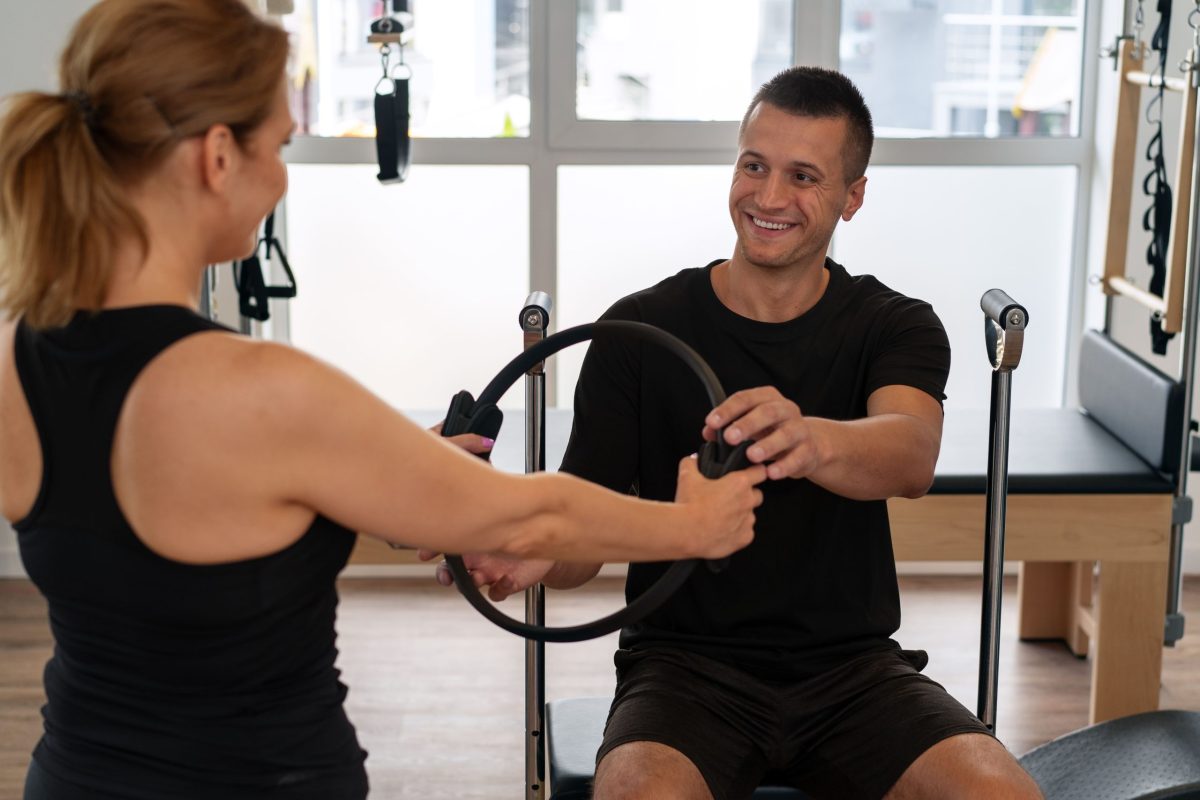
Pilates is loved worldwide for its ability to improve posture, strengthen the core and support recovery from injury (Patti et al, 2024). But here’s a crucial question that too few people ask before joining a class:
Who trained your trainer?!!
When it comes to Pilates not all instructors are created equal. Unlike physiotherapy, medicine or personal training, the Pilates profession is unregulated. This means that someone can attend a short weekend course, walk away with a “certificate” and start teaching; often with little or no knowledge of anatomy, physiology or injury management.
For the thousands of people who turn to Pilates specifically to recover from back pain, rehabilitate after surgery or manage chronic conditions, this lack of training is more than concerning – it can be dangerous!
Why Pilates Instructor Training Matters
Research consistently shows that exercise can improve musculoskeletal health, reduce pain, and enhance quality of life (WHO, 2020). But these benefits depend on how exercises are taught and adapted.
A well-trained Pilates instructor should be able to:
- Understand functional anatomy and biomechanics.
- Adapt exercises safely for conditions such as low back pain, osteoporosis, or post-surgical recovery.
- Provide progressions and modifications that are evidence-based.
- Recognise when a client requires referral to a physiotherapist or healthcare professional.
Instructors without this knowledge risk teaching movements that exacerbate pain or cause new injuries. Imagine attending a class for back pain relief only to perform exercises that increase spinal loading because your instructor wasn’t trained to recognise contraindications.
The Rise of “Fast-Track” Certifications
With Pilates growing in popularity, many training providers have rushed to meet demand. Some now offer “qualifications” in as little as two days. These courses may provide a few routines to follow but rarely cover:
- Anatomy and physiology
- Injury rehabilitation
- Movement science
- Long-term client progression
This is why asking about your instructor’s education is so important. Without rigorous training, clients are left vulnerable.
The APPI Pilates Difference
At APPI Pilates we believe that Pilates should always be safe, effective and grounded in science. That’s why our education programs were developed by physiotherapists and are now recognised as a global gold standard in Pilates training.
Here’s what sets APPI apart:
- Scientific foundation – Our courses are designed by physiotherapists and integrate medical knowledge with Pilates principles.
- Comprehensive education – Training spans weeks or months, not days, with modules in anatomy, pathology and clinical applications.
- Evidence-based approach – We draw on the latest scientific research in rehabilitation, injury prevention and exercise science.
- Global recognition – APPI has trained over 60,000 instructors worldwide, across 32 countries and continues to lead the way in professional Pilates education.
- Ongoing support – We encourage continuous professional development, ensuring our instructors stay up to date with new research and techniques.
When you choose an APPI-trained instructor, you’re choosing someone who has the knowledge to adapt Pilates safely; whether you’re recovering from injury, managing chronic pain or simply wanting to move better.
What Should You Ask Before Joining a Pilates Class??
If you’re considering Pilates, here are some key questions to ask your potential instructor:
1. Where did you train?
2. How long was your training?
3. Did your course include anatomy, physiology, and injury management?
4. Do you participate in ongoing education?
A confident, qualified instructor will be proud to tell you about their training. If the answers are vague, or the course lasted only a few days, it may be worth reconsidering.
Choose Safe AND Effective Pilates!!
The power of Pilates lies in its ability to help people move freely, recover from injury, and live without pain. But this power depends entirely on the knowledge and skill of the instructor.
That’s why the most important question you can ask is: “Who trained your trainer?”
At APPI Pilates, we are proud to set the standard in professional Pilates education. Our mission is to ensure that every instructor we train is equipped with the knowledge to deliver Pilates that is not only safe but also life-changing.
Learn more about APPI Pilates instructor training programs here.
Find a fully qualified APPI-trained Pilates instructor near you.
Because your health is too important to leave in unqualified hands.
——
Patti A, Thornton JS, Giustino V, Drid P, Paoli A, Schulz JM, Palma A, Bianco A. Effectiveness of Pilates exercise on low back pain: a systematic review with meta-analysis. Disabil Rehabil. 2024 Aug;46(16):3535-3548 WHO guidelines on physical activity and sedentary behaviour
Kristina Holding
APPI Presenter | International Relations Manager
