If you had asked me a few years ago what the next big piece of Pilates equipment would be, I probably would have said more reformers. Studios everywhere have filled with them – and for good reason. They are incredibly versatile and help people build strong foundations in movement.
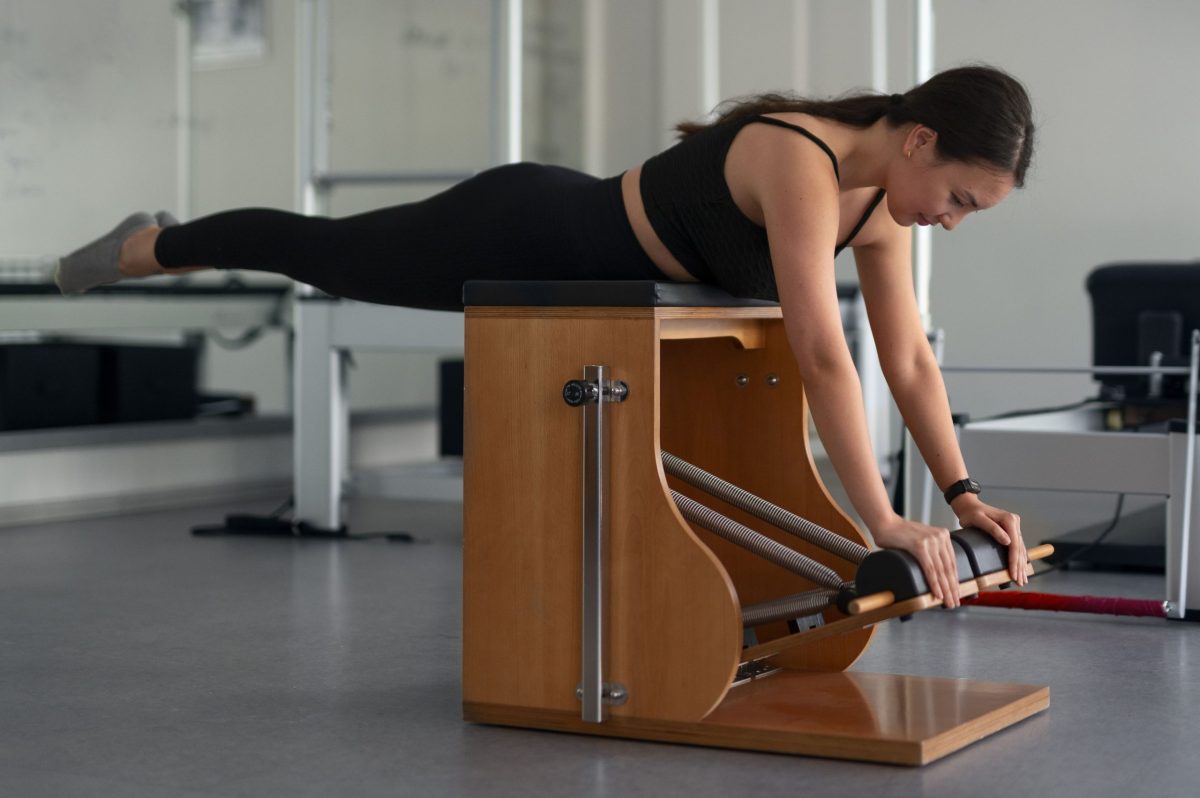
But recently, I have found myself talking more and more about another piece of equipment that I think is about to have its moment: the Pilates chair.
In fact, I have just finished redeveloping the new Chair course for APPI, partly because it has become a bit of a passion project of mine. The more I teach it, the more I realise just how much potential this small piece of equipment has.
From Reformer Foundations to Chair Challenge
I still believe the reformer is the best place to start. The moving carriage provides feedback and support, and it is a brilliant environment for building the foundations of Pilates movement.
But once those foundations are in place, the chair becomes a really exciting next step.
The supporting surface is much smaller, so suddenly the body has to organise itself differently. Balance, control, and coordination become far more apparent. Movements that felt comfortable on the reformer suddenly feel more athletic and demanding.
That is where the chair really shines – it takes everything you have learned on the reformer and simply turns the dial up.
Movements You Simply Cannot Do on the Reformer
Another reason I love the chair is that it opens the door to movements you simply cannot do on the reformer.
Think stepping patterns, powerful single-leg work, beautiful pike variations, and some truly dynamic advanced exercises. The upright nature of the chair changes the entire movement vocabulary.
For athletic clients, it is brilliant. There is something about working from a small platform – pushing and pulling against the pedals – that feels strong and dynamic in a completely different way.
I have clients who absolutely love hanging off the side of the chair while performing quite advanced work. It feels playful, challenging, and surprisingly powerful.
But It Is Not Just for Advanced Clients
What often surprises people is that the chair is not only for the super strong or highly experienced.
In some ways, it can actually be very beginner-friendly.
You can simply sit on it.
That sounds obvious, but it is incredibly useful. Some people struggle with getting up and down from the floor or lying on their back – think older clients, pregnancy, or anyone who feels uncomfortable being fully supine for extended periods.
The chair allows you to keep people upright and supported while still doing meaningful Pilates work.
So while we often think of the chair as an advanced piece of equipment, it actually sits very comfortably at both ends of the spectrum.
The Workhorse of the Studio
Another reason I believe the chair is about to grow in popularity is practical.
Studios are always balancing space and cost. Reformers are wonderful, but they are large pieces of equipment and represent a significant investment.
The chair, on the other hand, is a bit of a workhorse.
It does not take up much room, is easy to move around, and can be used in many different ways. You can wheel it out, run an entire session on it, and then tuck it away again.
It also makes a fantastic addition alongside reformers. Rather than replacing them, it expands what you can offer.
A Great Option for Home Practice
The original Pilates chair was actually designed to flip over and become a piece of furniture. This was Joseph Pilates’ clever way of integrating exercise equipment into small New York apartments.
We probably will not be turning our chairs into living room furniture these days, but the principle still holds.
If someone does not have the space for a reformer at home, the chair is a brilliant alternative. It is compact, versatile, and easy to move around.
A Shift in the Pilates Skillset
What I find particularly interesting at the moment is that searches for chair training are starting to rise. Studios are beginning to look beyond the reformer, and instructors are starting to realise that expanding their equipment skillset really matters.
In some ways, the rise of the chair may represent a broader shift in the Pilates industry.
For the last few years, the reformer has been everywhere. It has been the gateway piece of equipment, and in many studios it is the only apparatus instructors are trained to use. That has made Pilates more accessible, which is a positive thing.
But my sense is that the next phase of Pilates education will move us back towards a slightly more traditional approach – where great instructors are not just reformer instructors, but equipment specialists.
The chair is often the first step in that journey.
From there, it naturally leads into exploring the Cadillac, the ladder barrel, and other pieces of studio equipment that expand what Pilates can offer.
In my experience, the instructors who stay in this industry for the long term are the ones who continue to expand their equipment skills.
Personally, I think it is one of the most exciting pieces of equipment in Pilates right now, and I am really looking forward to teaching our first newly developed APPI Chair course this June.
Written by:

Dawn Buoy
Global Education Advisor, APPI