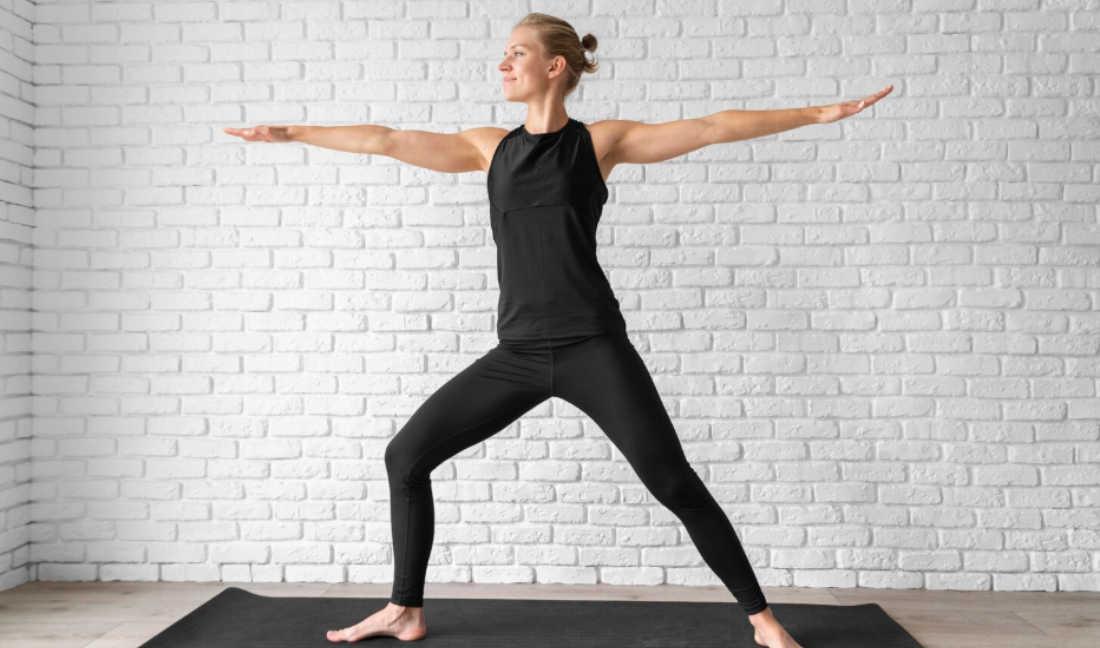
3D Standing Pilates is a fabulous way to introduce Pilates into an antigravity position, exploring multi-planar movements with the aim of improving movement, balance quality and efficiency.
It is ideal for those who struggle with mat Pilates and coming off the floor to the athlete that is looking for end-stage rehabilitation or prehab to enhance performance…and the many clients in between who need a stretch, strengthening and rebalancing following a day of sitting at a desk or at work!
Key Benefits of Standing Pilates
- Provides stability, strength and control around the pelvis, hip, knee, ankle and foot
- Improve Static and Dynamic Balance
- Bone loading for Bone health and the management of Osteoporosis
- Posture Awareness and organisation of the body in an antigravity position
- Functional retraining
- Great way to introduce Pilates practise if you are struggling with getting on and off the floor
- Mind setting at the beginning and end of a class
What is it?
The movements are following the matwork principles but in standing, with influences from the world of gyrokinesis, yoga and functional stability retraining based on the work of Myers, Vleeming, Lee, Jull, and Hodges. During Joseph Pilates‘ lifetime, it is believed that he was keen to introduce Standing Pilates into his program; however, there was a limited framework from which to base it. In his first book, he is posing in a standing position despite the contents reflecting Mat-based exercises.
The practical bit!
When exploring the APPI 3D Standing Pilates, we need to use all our sensory signals to create balance in the body, so as Pilates instructors, our cues (through verbalisation, visual, tactile and proprioception input) must assist our client to “listen to their body”, to be body aware and self-perceive mal – alignments before progressing on.
Once this baseline is established, the client can be taken through a sequence of movements to:
- Enhance body awareness with and without mirrors.
- Train Balance, reducing the base of support and visual input or using props, e.g., oval pads, gondola poles,
- Progress to add limb movements towards multiplanar movements and then total body movements.
- Incorporate resistance with resistance bands, weights, dual task activities, jumping and variations in somatosensory input.
The role of Myofascial Meridians and 3D Standing Pilates
To assist with exercise selection, understanding the role of fascia in healthy movement and postural distortion is valuable. A continuous map of myofascial meridians provides an energetic line of force transmission – stability, strain, tension, fixation and postural compensation. While many lines of pull may exist, individuals may set up unique strains and connection though injury, adhesion and attitude.
Tom Myers Anatomy Trains provides a great framework to assist our understanding of where problems might emanate to the real location, with focus on direction, depth, and interconnection with other lines.
The 4 Cardinal lines discussed on the APPI 3D Standing Course, which run the length of the body on one of the 4 major surfaces.
- The Superficial Front line
- The Superficial Back Line
- The Spiral line
- The Lateral Line
The efficient interconnection of these lines in everyday function is crucial
- With sitting to standing, we look for a balance and equilibrium between the superficial front line and superficial back line to prevent overloading into the neck and back, and efficient transfer of force from trunk to pelvis and into the lower limb
- With walking, all the lines work to prevent buckling yet balanced rotation of the trunk, to provide good control at the pelvis, hip, knee, ankle, which in turn provides good stride length with extension of the hip and push off, deceleration with heel strike, with an outcome of an efficient, balanced walking pattern without overload.
The APPI 3D Standing Pilates Program assists with a greater understanding of targeting muscles in groups and anatomy training rather than individual muscles.
Now let’s talk Osteoporosis and APPI 3D Standing Pilates!
Finally, when considering the importance of APPI 3D Standing Pilates, its role in the management of the client with Osteoporosis is invaluable in the promotion of bone health and prevention of fractures. The evidence suggests that physical activity and exercise are not associated with significant harm, especially in causing vertebral fractures, with the benefits outweighing the potential risks.
Management themes as highlighted by the ROS (Royal Osteoporotic Society ) and a study published by Brooke-Wavell K et al 2022 suggested the following :
Strong: weight-bearing and muscle resistance exercises to promote bone strength, site-specific (Wrist, hip and spine).
- Recommendation for all people with osteoporosis: 50 impacts per session on most days (stamping, jogging, jumping)
- Recommendation for individuals with Osteoporosis who have vertebral fractures or multiple low-trauma fractures: Impact exercise on most days at a lower level up to brisk walking for 150 minutes per week, but advice from a physiotherapist is important, as progressive resistance training exercise is important as well as correct technique before starting a new activity.
Steady: exercise to promote balance and muscle strength, reduce the risk of fractures, and increase confidence in enjoying other forms of exercise
- Recommendation for those with osteoporosis with balance problems: Tai Chi, dance, Pilates and yoga recommended twice a week.
- Recommendation for those with Osteoporosis who are falling already: 3hours per week for at least 4months of highly challenging and muscle strength training (Otago and FaME)
Straight: postural re -education in ADL, encouraging a positive approach to bending, safe moving and lifting techniques to reduce the risk of fracture, improve posture and relieve pain after a vertebral fracture. Exercises to focus on strengthening the back muscles.
So APPI 3D Standing Pilates has a massive with many clients and patients.
And it’s also great fun to practise and teach!
References
- Myers Anatomy Trains 4 Edition May 2020
- Lee D The Pelvic Girdle: An Integration of Clinical Expertise and Research, 4th Edition
- Brook -Wavell et al British Journal of Sports Medicine 2022: 0 1-10. Strong, steady and Straight: UK Consensus Statement on physical activity and exercise for osteoporosis.

Sarah Chambers
APPI Master Trainer
Studio Owner of Brook Pilates and Physiotherapy.